Showing posts with label Conservative. Show all posts

Wednesday, 12 August 2015

General Election 2015 - what really happened?


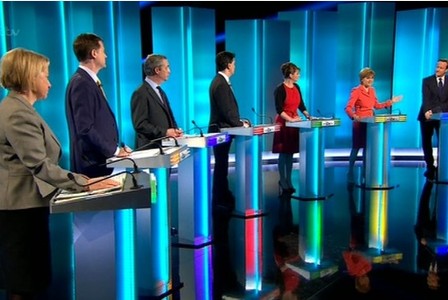
It is now just over three months since the General Election result and the political landscape has been transformed.  From a position of a virtual dead heat the Conservatives are now the dominant force in British politics with no serious opposition, the Labour Party are disintegrating, the LibDems have been reduced to a pile of rubble, no-one quite knows where UKIP are, and Scotland is virtually a one party state.  

In these last few months I have had time to read a lot, think about what has happened and look at the stats.  Not least, I have had a look at some of the things the British Election Study has identified about the motivations of the electorate.  Before the myths and legends of election 2015 take root I wanted to jot down a few things I believe to be true in understanding the drivers for the electorate at this election and where I think our politics are at.

A crucial thing to understand about General Election 2015 is that the Conservative Party did not see a significant increase in their support and there was not a return to 2 party politics.  Nor was there a significant reduction in Labour support from 2010 over the country as a whole.

The key dynamics were in fact the disintegration of LibDem support, the SNP landslide in Scotland and a large anti politics UKIP vote, although to negligible electoral effect. The Greens also had a larger vote than in previous elections, although less than they might have hoped.


 Source: Electoralcalculus

The Labour result was in fact a disaster saved only by defecting Liberal Democrats. This was made worse by the realisation that they were the opposition to not altogether popular government after five years of austerity in a financial crisis struck world.

One of the main features of election 2015 was the SNP tidal wave in Scotland where they won nearly all the seats and 50% of the vote.  The 2010 Labour voters who went over to the SNP were the most concerned by cuts in public spending, the least convinced about the need for deficit reduction, and felt that if we did have to address public spending it needed to be by tax rises and not cuts.

For left of centre inclined voters, the most effective thing to do in terms of electoral positioning was to be apparently centrist, anti-austerity, and economically competent.  This worked well for the SNP.  For Labour on the other hand, having a position which seemed to be austerity-lite did not work.  They probably needed to appear anti-austerity while economically competent to be more successful. 

In Scotland, Labour particularly lost out on not seeming anti austerity enough and the nationalist / anti politics sentiment grew.  

A paradox in Scotland that sealed the SNP rout of unionist parties was that a segment of Independence Referendum No voters voted SNP to take their popular vote to an unprecedented 50%.  This crucial group were partly looking for an anti-austerity proposal and were particularly beguiled by the prospect of a Labour minority administration given what they perceived as back-bone by the SNP. A smaller group were disappointed as they perceived there were not enough new powers for Scotland on offer when in fact significant powers had been brought forward and precisely according to the timetable promised.

In the election campaign there were a mass of contradictory claims, seemingly badly costed, confusing and complex.  Therefore, it was impossible to discern what the best deal was.  When the voting public is hit by conflicting claims of an unclear message they fall back on other simpler things to make up their minds. This means their view on the party leaders.  This was crucial.

The view of party leaders in comparison with Ed Miliband helped David Cameron.  It was also another factor which helped the SNP. 

What the LibDems were offering or what they were even for had become unclear and people had stopped listening to their leader some time before election.

The Greens fell back from a promising pre-election position because of this compounded by credibility of economic competence which unravelled somewhat for them during the campaign.

The Conservatives stuck very narrowly to a mantra of having a long term economic plan.  Economic competence, at least in contrast to Labour and their leader being relatively well thought of, again in comparison with Labour helped the Conservatives maintain and very slightly increase their 2010 support.  While this was not that impressive given 2010 was a disappointing result for the Conservatives as they failed to gain a majority after 13 years of Labour and an economic crisis, it was impressive given the rise of UKIP collecting anti politics support to their right.

The Conservatives were able to tactically cannibalise LibDem seats and squeeze enough LibDem voters and UKIP voters in key seats to win a majority under our First past the Post system.

The British Election Study found limited evidence of a fear of a Labour-SNP coalition driving votes to them.  However, both the Conservatives – who operated some very sophisticated voter modelling – and the LibDems found movement at the end of the campaign in LibDem seats to the Conservatives on this very fear tipping key seats into the Conservative column and ensuring the LibDem meltdown.

Interestingly, the Conservatives had some success moving UKIP supporters their way in key seats.  This did not happen in the north where UKIP were Labour facing.  However, this meant that while UKIP did well they only won one seat even though nearly 4 million voted for them.

So in short, an election where Labour lost on perception of economic competence and their leader but also for positioning themselves as austerity lite.  An election where the Conservatives won no ringing endorsement but won a majority under our system by a narrow message of competence or at least having a plan and a very effective tactical squeeze of LibDems and UKIPers in key seats.

But overall an election where the key dynamics were actually the destruction of the LibDems and the irresistible rise of the SNP.

I leave you with a question.  Is there a parallel between Scottish Nationalists and the Irish Nationalists of 1874 who came from nowhere to get 60 seats and it never went back?

Monday, 20 May 2013

Fourteen thoughts

Some thoughts on British politics three years into the current government.

1. The Conservative Party has never understood nor accepted coalition.

2. The Conservatives have never really accepted they didn't win the election in 2010.

3. The Conservatives historically have always eaten themselves every generation or so over tariff reform / Europe.

4. The Conservative Party are split between two generations and split over Europe.

5. The Conservatives head for the next election split from head to foot, somewhat directionless and their idealistic drive for public sector cuts and excessive austerity (too deep, too quick and no plan B) discredited.

6. The Labour Party are struggling to find their soul and with an uncharismatic leader.

7. The Labour Party are caught between the economic policy they know they would have to deliver and what they would like to deliver.

8 The SNP are caught with a somewhat shallow policy and a tendency to grandstand for the purposes of delivering independence.

9 The SNP's proposition of low taxes plus increased social justice is wearing thin and intellectually dishonest.

10 The SNP may still have the political prowess to take advantage of the situation but their credibility is diminishing.

11. This vacuum of political disappointment in times of global financial crisis may yet help the LibDems.

12 But the LibDem brand is damaged and Clegg may lack the charisma or political nouce to take advantage. These are both his challenges and his opportunities.

13 Into this vacuum floods UKIP but what is their point? Their solutions are shallow, ill formed, populist, mean and stand up to little scrutiny.

14 So, there is all to play for - we live in interesting times!

Wednesday, 17 April 2013

We come to bury Thatcher not to praise her...

I write on this, Margaret Thatcher's funeral day.


"Friends, Romans, countrymen, lend me your ears.
I come to bury Caesar, not to praise him.
The evil that men do lives after them;
The good is oft interrĆØd with their bones..."
Julius Caesar  Act 3, Scene 2

So begins Mark Anthony's funeral oration for Julius Caesar.

Tony Benn tells the story that he met Mrs Thatcher at the funeral of Eric Heffer, the veteran left wing MP.  Heffer was a socialist and collectivist and one whose viewpoint Mrs Thatcher strongly opposed.  But, nevertheless, she had come to pay her respects to a political opponent and fellow parliamentarian. 

It is right that political colleagues should gather with family and friends for her funeral.  She was a Prime Minister of our nation and the first woman to hold this office.  Along with The Edwardian Liberals of 1906 and the post war Labour government of 1945, she led one of the three most important administrations in the 20th century. She was a servant of Britain and it is right to honour her in death.  This does not mean I agreed with her.  I fought against her.  Opposition to her politicised me in many ways.  I do not believe I was wrong then and I do not support what she did now.  But it is right to honour her in death.

An economics lecture I attended in the summer of 1984 pretty much nailed an accurate and fair assessment of her administration in my opinion.  It remains remarkably sound in its analysis, even today.  Given by a lecturer whose sympathies were left of centre it was nonetheless a non partisan academic giving a reasoned, objective and evidence based assessment.  He was speaking a year into her second term. The miner's strike was underway, the worst of the recession was behind her, council house sales had been a success and she was just beginning the privatisation sell offs.

He painted a picture of an administration that did a number of things that probably had to be done and that had an idealistic agenda to change the post war consensus to make Britain more fit for economic realities. He showed how, on both counts, Mrs Thatcher was a qualified success.

She came to power in 1979 at the end of a decade where the trades unions seemed incredibly undemocratic and a number of union Barons wielded an inappropriately large amount of power.  This power seemed to be more about applying restrictions that held the economy back or about wielding political power, rather than fighting for workers' rights.  It was also the end of a decade that was extremely hard economically.  We had faced two recessions, rampant inflation and high taxes.

Mrs Thatcher changed this.  High inflation became a thing of the past, taxes were lowered and the unions were tamed.  The number of days lost to strike action reduced dramatically and politically motivated disputes seemed a thing of the past.

However, the great question is how much of this would have happened anyway?

Economic growth during the 1980s was only a little better than its post war average.  Thatcher in fact ditched monetarism (trying to control inflation by controlling the money supply) after a few years as they kept over shooting their targets.  However, there is no doubt that inflation was tamed.  I suggest strongly that we did not need Thatcherism to tame both high inflation and taxation - they would have happened anyway, one way or another.

I think what Mrs Thatcher delivered was an end to the 'Bustkellite' post war political consensus and the idea that there is no such thing as a free lunch - governments may be full of good intentions but services have to be paid for and you cannot pay for anything unless the country is making money from goods and services.

As Stephanie Flanders put it on the BBC, Thatcher made us all powerful as consumers which is actually quite liberating.  Before the powerful were the CBI and Unions.  The coverage of elections in 1979 and 1983 - especially the 79 one are full of interviews with some extremely boring, self important and breathtakingly un-self aware union leaders.  The CBI types were no less of a self-parody.  The framing of politics as unions v bosses was sterile and neither side represented the British people particularly well.  

Mrs Thatcher also wanted to turn us into a property owning, share owning democracy.

She succeeded in making us property owners with most of us owning our own homes after Thatcher.  The Conservative policy of selling off council houses at a discount was enormously popular and empowering for people.  On the negative side the social housing stock was not replenished and we do not have enough of this right up to the present time.

I am not so sure she succeeded in turning us into a share owning democracy.  Many of us owned shares by the end of the 1980s, whereas before this was a preserve of the elite.  However, few people owned anything other than privatisation sell-off shares.

However, in subsequent years more have come to own shares indirectly through personal pension plans, PEPs and then ISA plans, but this has been a qualified success. 

She also lowered tax - especially on the wealthy and companies - and replaced some of this with higher VAT.  Now some of this needed to happen to balance the tax rates and stop them being unnecessarily punitive.  Paradoxically this probably led to an increased tax take and helped business develop.  However, she was a believer in supply side economics and guilty of seeing low tax as an incentive (to the wealthy) and benefits (for the poor) as a disincentive.  Hmmmmmm - no doubt there is a valid point in there but it always felt to me that the wealthy and powerful wrote that one!

The casino economy

The lecture I heard in 1984 pointed out we were creating more of a casino economy than a strong sustainable one.  Subsequent writers have pointed out the same.  I have to say I believe this is a key weakness of Mrs Thatcher's legacy.

"Speculators may do no harm as bubbles on a steady stream of enterprise. But the position is serious when enterprise becomes the bubble on a whirlpool of speculation. When the capital development of a country becomes a by-product of the activities of a casino, the job is likely to be ill-done."
John Maynard Keynes, "The General Theory of Employment, Interest and Money

Herein lies the criticism.  Monetarism - although it played a part in reducing very high inflation - ultimately failed as it accelerated the decline of manufactured industry and the increase in unemployment.  She created unemployment blackspots which remain blackspots to this day.  She created a drift of jobs to the south and an economy based on service jobs.  The collapse of rust belt industries meant a loss of engineering skills which we could have done with more of in order to create sustainable jobs.

That's not to say she was wrong to liberalise the economy in order to let it adapt.  These policies had many successes.  And, as my lecturer pointed out in the summer of 1984 - still early in the miners’ strike - there would be only one working coal mine left in Scotland by the end of the 1980s.  He was right! 

Similarly, she deregulated financial services.  Big Bang, the Financial Services Act 1986, and liberalising the functions and capabilities of Banks, Building Societies, Insurers and Friendly Societies produced a boom in financial services.  This helped to inject more capital to oil the wheels of the economy.   This contributed to the huge success of Edinburgh and places like Leeds as financial centres - not just London.

Now, the global financial crisis of 2008 cannot be her fault, nor the subsequent prolonged period of chronic low growth we now find ourselves in.  But she sowed the seeds. 

Her economic approach produced no German economic miracle of mostly sustainable, high production, high technology jobs with longevity for the 21st century.  At times she seemed a little callous running a laissez faire approach to liberalisation and economic natural selection letting rotting fruits wither on the vine.  None of this is easy of course.  They say that if you have a tomato plant spilling all over the place, rather than try to water and feed all of it with finite resources, you are best watering the strong bits thoroughly at the expense of the less viable parts.  That way the whole plant will thrive and the largest and best quality crop will be produced.  Nevertheless, in letting heavy industry die and in accelerating the decline of manufacturing through the mistakes her governments made in the early 1980s, we lost a lot of engineering skills.

There was not enough mix in the economy.  By and large the economic blackspots of the 1980s are still economic blackspots.  We rely too heavily on the service sector, too heavily on financial services and too heavily on the South-East.

Keynes wrote about economic bubbles and too much speculation.  The housing booms created too much economic activity based on remortgage debt.  The approach to shares was rather more about investment returns from a killing on the market, rather than capital investment in productivity.  It was too much about consumption and not enough about investment and reconstruction of our rust belts.

The global financial crisis and subsequent lost decade have been caused by bursting bubbles – first a property one and then a credit one.  Throw in reckless banking policies and a shadow banking system based on speculation - that our ratings agencies and regulators were not equal to - and bang, the economy has faltered on an epoch creating scale!

It is of course complicated to get right.  I am probably still a Keynesian at heart  but you cannot simply spend your way out of a recession – Callaghan recognised this at the end of the 70s.  Mrs Thatcher’s policies of stimulating growth, and of freeing markets and consumerism were important and needed.  But, I think she was altogether too dogmatic – a warrior on a mission.

Thatcherism

So what of Thatcherism itself?  Thatcher’s greatness we are told comes in part because she had her very own ism.  What other Prime Minister can boast that?
  
Nigel Lawson described Thatcherism as “Free markets, financial discipline, firm control over public expenditure, tax-cuts, nationalism, Victorian self-help, privatisation and a dash of populism.”

In truth I don’t think Thatcherism was so great - in fact, if you break it down, it was rather quirky and odd .  It was a curious mixture of the radical and the conservative; of the authoritarian and the liberal.

In many ways I think it was actually the death throes of a generation forged by the second world war.

I well remember her ostentatiously putting a tissue over the rather funky one world design, which had replaced the Union Jack on the tail of a model British Airways jet.  She was a character of contrasts, a politician who delivered for the country and one who also did great harm.

She stood up to excessive and undemocratic union power and to other vested interests.  And let it not be forgotten she stood up to fascist neo-colonialism from an ugly Argentinian regime in the South Atlantic.  But she was also enormously divisive.  At home at times she went to war with her own people – the enemy within.  This was not the greatness of a British Lincoln say, who defeated the divisions that needed defeated then held a hand out to rebuild.   

Yes, I see Thatcher as a qualified success.  She is now owned by the Historians, as someone said today, and they will see the good and the bad in her legacy.

I think by 1979 the writing was already on the wall - for excessive and undemocratic union power - for politically motivated strikes - for high inflation.  However, Thatcher must take credit for her determination, bravery and leadership.  Her single minded nature and clarity of thought made sure things that were often challenging were in fact achieved 

But, I think she also brought unnecessary division - the enemy within and a seeming lack of empathy for those not with her - a warrior who seemed to see things in black and white.

And let us not forget that much of her power came because Labour imploded and was unelectable in this period and the opposition was split between the centre-left Alliance and a confused Labour party.

Personally, I would rather have seen the Alliance break through in 1983 or Thatcher fall during the Westland crisis in 1986.  I think Thatcher had made her contribution by then and we would have been better served to consolidate and build in an altogether more constructive way by the toughness and tenderness of the Liberal and SDP alliance.