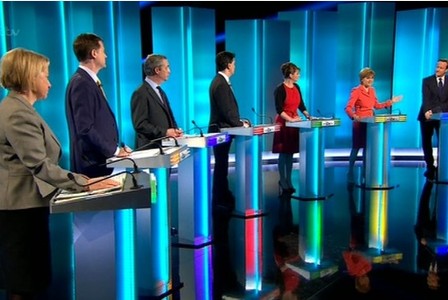
It is now just over three months since the General Election
result and the political landscape has been transformed. From a position of a virtual dead heat the
Conservatives are now the dominant force in British politics with no serious
opposition, the Labour Party are disintegrating, the LibDems have been reduced
to a pile of rubble, no-one quite knows where UKIP are, and Scotland is virtually
a one party state.
In these last few months I have had time to read a lot,
think about what has happened and look at the stats. Not least, I have had a look at some of the
things the British Election Study has identified about the motivations of the
electorate. Before the myths and legends
of election 2015 take root I wanted to jot down a few things I believe to be true
in understanding the drivers for the electorate at this election and where I
think our politics are at.
A crucial thing to understand about General Election 2015 is
that the Conservative Party did not see a significant increase in their support
and there was not a return to 2 party politics.
Nor was there a significant reduction in Labour support from 2010 over
the country as a whole.
The key dynamics were in fact the disintegration of LibDem
support, the SNP landslide in Scotland and a large anti politics UKIP vote,
although to negligible electoral effect. The Greens also had a larger vote than
in previous elections, although less than they might have hoped.

Source: Electoralcalculus
The Labour result was in fact a disaster saved only by
defecting Liberal Democrats. This was made worse by the realisation that they
were the opposition to not altogether popular government after five years of
austerity in a financial crisis struck world.
One of the main features of election 2015 was the SNP tidal
wave in Scotland where they won nearly all the seats and 50% of the vote. The 2010 Labour voters who went over to the SNP
were the most concerned by cuts in public spending, the least convinced about the
need for deficit reduction, and felt that if we did have to address public
spending it needed to be by tax rises and not cuts.
For left of centre inclined voters, the most effective thing
to do in terms of electoral positioning was to be apparently centrist,
anti-austerity, and economically competent.
This worked well for the SNP. For
Labour on the other hand, having a position which seemed to be austerity-lite
did not work. They probably needed to
appear anti-austerity while economically competent to be more successful.
In Scotland, Labour particularly lost out on not seeming
anti austerity enough and the nationalist / anti politics sentiment grew.
A paradox in Scotland that sealed the SNP rout of unionist
parties was that a segment of Independence Referendum No voters voted SNP to
take their popular vote to an unprecedented 50%. This crucial group were partly looking for an anti-austerity proposal and were particularly beguiled by the prospect of a Labour minority administration given what they perceived as back-bone by the SNP. A smaller group were disappointed
as they perceived there were not enough new powers for Scotland on offer when
in fact significant powers had been brought forward and precisely according to
the timetable promised.
In the election campaign there were a mass of contradictory claims, seemingly badly costed, confusing and complex. Therefore, it was impossible to discern what the best deal was. When the voting public is hit by conflicting claims of an unclear message they fall back on other simpler things to make up their minds. This means their view on the party leaders. This was crucial.
The view of party leaders in comparison with Ed Miliband
helped David Cameron. It was also
another factor which helped the SNP.
What the LibDems were offering or what they were even for
had become unclear and people had stopped listening to their leader some time
before election.
The Greens fell back from a promising pre-election position
because of this compounded by credibility of economic competence which
unravelled somewhat for them during the campaign.
The Conservatives stuck very narrowly to a mantra of having
a long term economic plan. Economic
competence, at least in contrast to Labour and their leader being relatively
well thought of, again in comparison with Labour helped the Conservatives
maintain and very slightly increase their 2010 support. While this was not that impressive given 2010
was a disappointing result for the Conservatives as they failed to gain a
majority after 13 years of Labour and an economic crisis, it was impressive
given the rise of UKIP collecting anti politics support to their right.
The Conservatives were able to tactically cannibalise LibDem
seats and squeeze enough LibDem voters and UKIP voters in key seats to win a
majority under our First past the Post system.
The British Election Study found limited evidence of a fear
of a Labour-SNP coalition driving votes to them. However, both the Conservatives – who operated
some very sophisticated voter modelling – and the LibDems found movement at the
end of the campaign in LibDem seats to the Conservatives on this very fear
tipping key seats into the Conservative column and ensuring the LibDem
meltdown.
Interestingly, the Conservatives had some success moving
UKIP supporters their way in key seats.
This did not happen in the north where UKIP were Labour facing. However, this meant that while UKIP did well
they only won one seat even though nearly 4 million voted for them.
So in short, an election where Labour lost on perception of
economic competence and their leader but also for positioning themselves as
austerity lite. An election where the
Conservatives won no ringing endorsement but won a majority under our system by
a narrow message of competence or at least having a plan and a very effective
tactical squeeze of LibDems and UKIPers in key seats.
But overall an election where the key dynamics were actually
the destruction of the LibDems and the irresistible rise of the SNP.
I leave you with a question.
Is there a parallel between Scottish Nationalists and the Irish
Nationalists of 1874 who came from nowhere to get 60 seats and it never went
back?

